

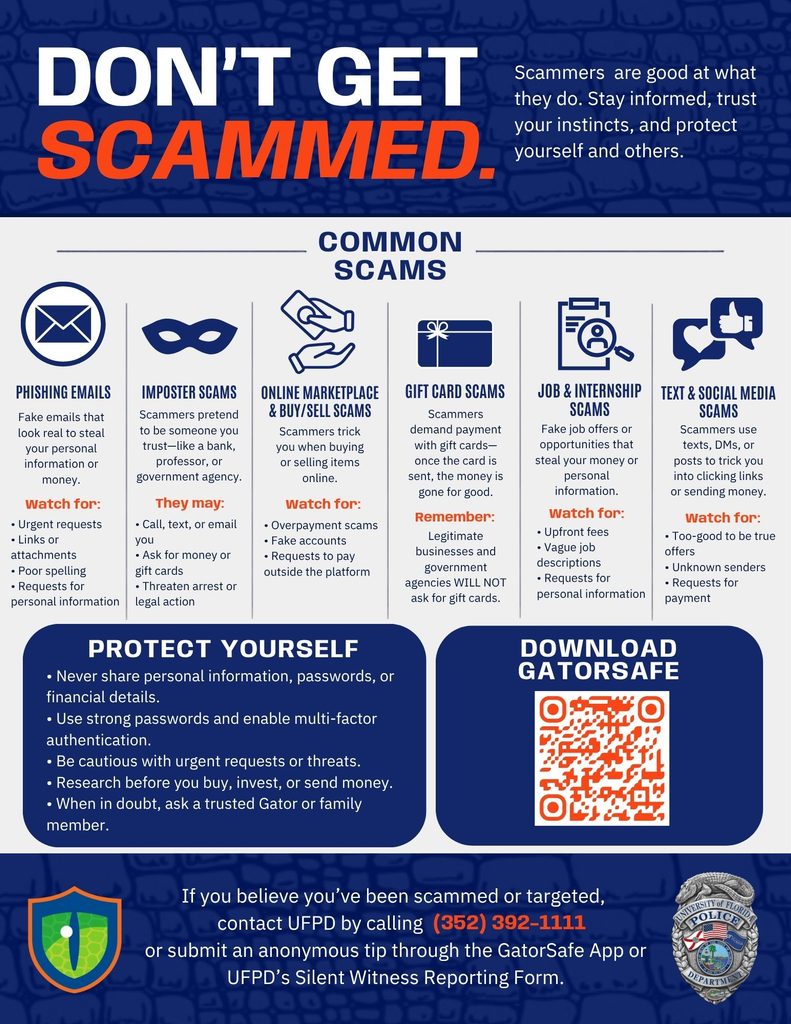
- If it sounds too good or too sketchy to be true, it probably is.
- Never share your personal or banking information with people you don’t know
- Never send photographs to anyone who could be a source of embarrassment or harassment
- Check cashing fraud has become extremely common – never cash a check for someone asking for the money up front. The check will bounce, and you’ll lose your money.
- If you receive a text or email asking you to purchase gift cards or send money to someone you don’t know, ignore it. Do not click any links or respond to any messages or calls from these scammers.
- If a caller claims to be a police officer, federal agent, or any other government representative demanding money, the call is a scam. No official will ever demand money via the phone or text.
- Scammers will try to intimidate victims. If a caller threatens to have you arrested, hang up.
- If a caller directs you to purchase gift cards or transfer payment in the form of virtual currency, the call is a scam.
- Watch out for “spoofed” numbers. Number “spoofing” makes the victim’s caller ID display a legitimate phone number even though the call is originating from somewhere entirely different.
- Scam artists target students seeking jobs or housing. Fake employers send fraudulent checks for more than the promised pay and ask students to send back the extra money, leaving the student responsible when the check bounces. Housing scammers advertise low-cost rentals they don’t own and request deposits to “hold” the property, causing victims to lose their money.
- If you believe you may be a scam victim, call the police immediately to report it – 352-392-1111
Report cyber-enabled crimes such as online scams, fraud, and identity theft through the Internet Crime Complaint Center (IC3). Operated by the Federal Bureau of Investigation, IC3 collects and analyzes complaints to support investigations and help prevent future cyber crime. Visit IC3 for more information.